ONT Transaction Types Listing
Description:
Imported Oracle standard Order Management transaction types listing, enhanced to show the setup across all operating units Description: Transaction Types Listing Report Application: Order Management Source: Transaction Types Listing Report (XML) Short Name: OEXORDTP_XML DB package: ONT_OEXORDTP_XMLP_PKG
Parameters
Operating Unit, Transaction Type Code, Order Category Code
Used tables
hr_all_organization_units_vl, oe_transaction_types_all, oe_transaction_types_tl, oe_price_lists_v, oe_credit_check_rules, org_organization_definitions, org_freight, ra_rules, ra_batch_sources, ra_cust_trx_types, fnd_currencies_vl, gl_daily_conversion_types, gl_code_combinations_kfv, mo_glob_org_access_tmp, dual
Categories
Related reports
ONT Transaction Types and Line WF Processes, AR Customer Upload
Dependencies
If you would like to try one of these Oracle EBS SQLs without having Blitz Report installed, note that some of the reports require functions from utility package xxen_util.
Example Report
ONT Transaction Types Listing 11-Jul-2021 230055.xlsx
Report SQL
www.enginatics.com/reports/ont-transaction-types-listing/
Blitz Report™ import options
ONT_Transaction_Types_Listing.xml
Case Study & Technical Analysis: ONT Transaction Types Listing Report
Executive Summary
The ONT Transaction Types Listing report is a comprehensive configuration audit tool that provides a detailed list of all Order Management transaction types and their associated setup attributes. As an enhanced version of a standard Oracle report, its key advantage is the ability to display and compare these setups across all operating units in a single view. It is a foundational report for functional analysts and system administrators for documenting, auditing, and ensuring the consistency of the core objects that drive order processing.
Business Challenge
Consistent and correct transaction type setup is vital for smooth order processing. However, auditing this configuration in a multi-organization environment is a significant challenge.
- Siloed Configuration Views: The standard Oracle application forms and reports typically only show the setup for the current operating unit. This makes it extremely difficult to perform a global audit or to compare setups between two different business units.
- Hidden Details: Key attributes that have a major financial or logistical impact—such as the assigned Price List, Invoicing Rule, and Credit Check rules—are not visible in a single summary view, requiring users to navigate to multiple different setup screens.
- Risk of Inconsistency: Without an easy way to compare, transaction types that should be identical can slowly drift apart between operating units, leading to process inconsistencies and user confusion.
- Manual Documentation Effort: Documenting the full setup for dozens of transaction types across a global implementation is a massive manual task, prone to errors and quickly becoming outdated.
The Solution
This report provides a multi-organizational, detailed listing of transaction type setups, offering a powerful tool for configuration management.
- Global, Cross-Organization Auditing: The report’s primary function is to display transaction type setups for all or multiple operating units at once, making it simple to identify and rectify any inconsistencies.
- Consolidated Attribute View: It brings together all critical attributes for a transaction type—from pricing and invoicing rules to credit checks and freight terms—into a single, easy-to-read line, providing a complete picture of the configuration.
- Enforces Standardization: It is the perfect tool for ensuring that corporate standards for order processing are being followed consistently across all business units.
- Automated and Accurate Documentation: The report serves as a live, accurate snapshot of the transaction type configuration, which can be exported and used for project documentation, audit requests, or end-user training.
Technical Architecture (High Level)
The report queries the central Order Management setup tables and joins them with various related definition tables to provide a user-friendly output.
- Primary Tables Involved:
oe_transaction_types_all(the main table storing the attribute settings for each transaction type per operating unit).oe_transaction_types_tl(for the name and description of the types).oe_price_lists_v(to get the name of the assigned price list).oe_credit_check_rules(to show the credit check rule setup).ra_rules(to get the name of the accounting and invoicing rules).
- Logical Relationships: The report’s logic centers on the
oe_transaction_types_alltable. For each transaction type, it performs lookups to other setup tables to translate the internal IDs for entities like Price List or Invoicing Rule into their human-readable names, making the report far more intuitive than a raw data dump.
Parameters & Filtering
The parameters allow for both high-level and specific views of the configuration:
- Operating Unit: Allows the user to run the report for a single OU or, if left blank, for all OUs they have access to.
- Transaction Type Code: Filters the output for a specific transaction type to see its setup across different organizations.
- Order Category Code: Allows filtering for specific classes of transaction types, such as all ‘Sales Order’ types or all ‘Return’ types.
Performance & Optimization
The report is designed for rapid execution.
- Optimized for Setup Data: The report queries configuration tables that have a low volume of data, resulting in near-instantaneous execution.
- Direct SQL vs. XML: As an enhancement of a standard BI Publisher report, this Blitz Report version offers superior performance by querying the database directly and delivering the output to Excel, avoiding the overhead of the XML/XSLT processing used by its predecessor.
FAQ
1. When should I use this report versus the ‘Transaction Types and Line WF Processes’ report? Use this ‘Transaction Types Listing’ report when you need to audit and compare the attributes of transaction types, such as price lists, credit rules, and invoice sources, especially across multiple operating units. Use the ‘Transaction Types and Line WF Processes’ report when you need to understand the process flow, that is, the specific workflow engine and process steps that are assigned to an order or line type.
2. What does ‘Order Category’ signify? The Order Category is a high-level classification for a transaction type. The main categories are ‘SALES’ for sales orders, ‘RETURN’ for return material authorizations (RMAs), and ‘MIXED’ for orders that can contain both sales and return lines. This allows for easy filtering and grouping.
3. How can I see if a transaction type is restricted to a specific operating unit?
The oe_transaction_types_all table contains the org_id column. This report will show a row for every operating unit (org_id) a transaction type is defined for. If a type is defined with a specific org_id, it is restricted to that OU. If it is defined without an org_id, it is typically available globally.
Oracle E-Business Suite Reporting Library
We provide an open source Oracle EBS SQLs as a part of operational and project implementation support toolkits for rapid Excel reports generation.
Blitz Report™ is based on Oracle EBS forms technology, and hence requires minimal training. There are no data or performance limitations since the output files are created directly from the database without going through intermediate file formats such as XML.
Blitz Report can be used as BI Publisher and Oracle Discoverer replacement tool. Standard Oracle BI Publisher and Discoverer reports can also be imported into Blitz Report for immediate output to Excel. Typically, reports can be created and version tracked within hours instead of days. The concurrent request output automatically opens upon completion without the need for re-formatting.
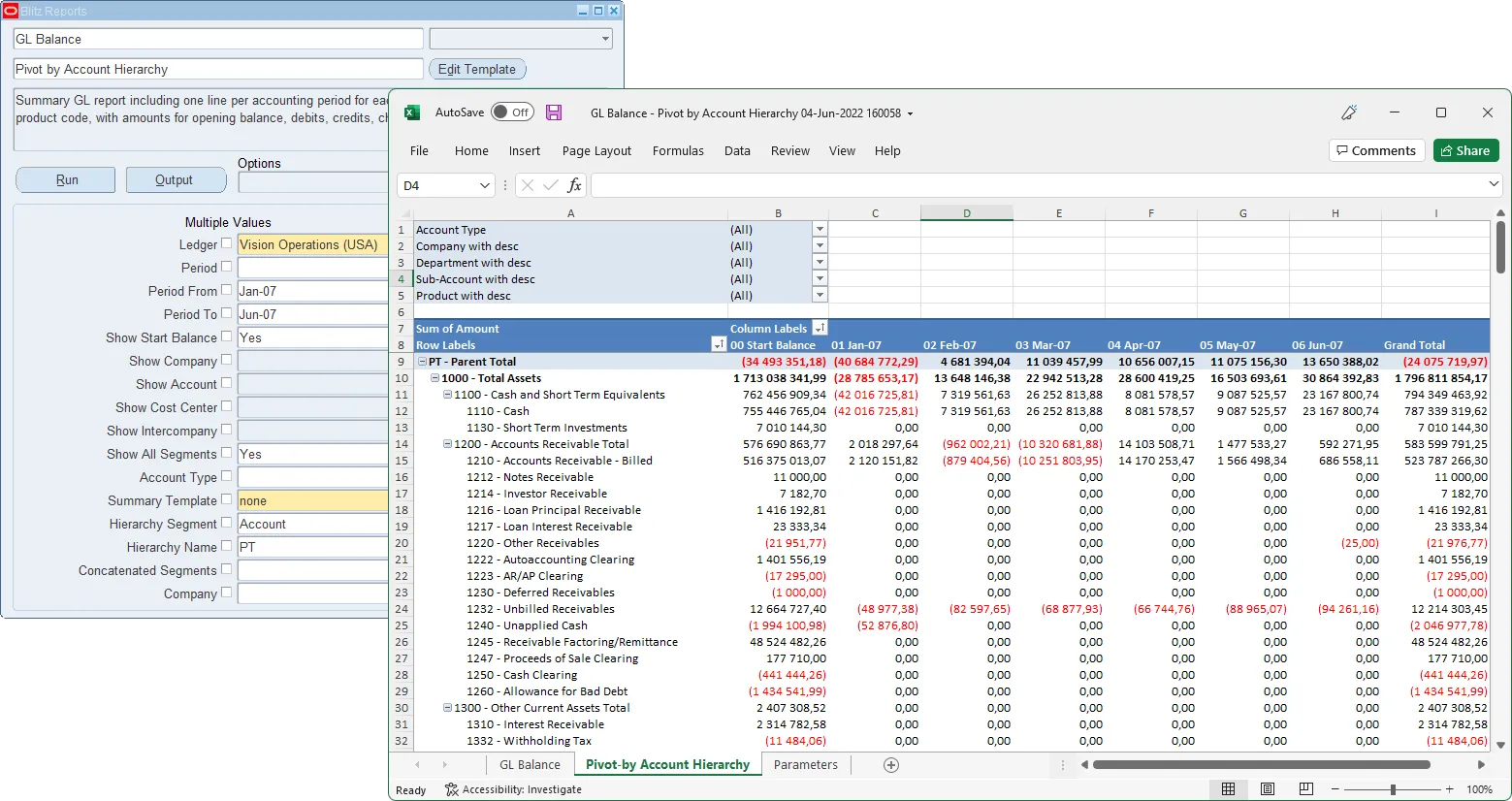
The Filters, Columns, Rows and Values fields are used to create and deliver the data in pivot table format with full drill down to details.
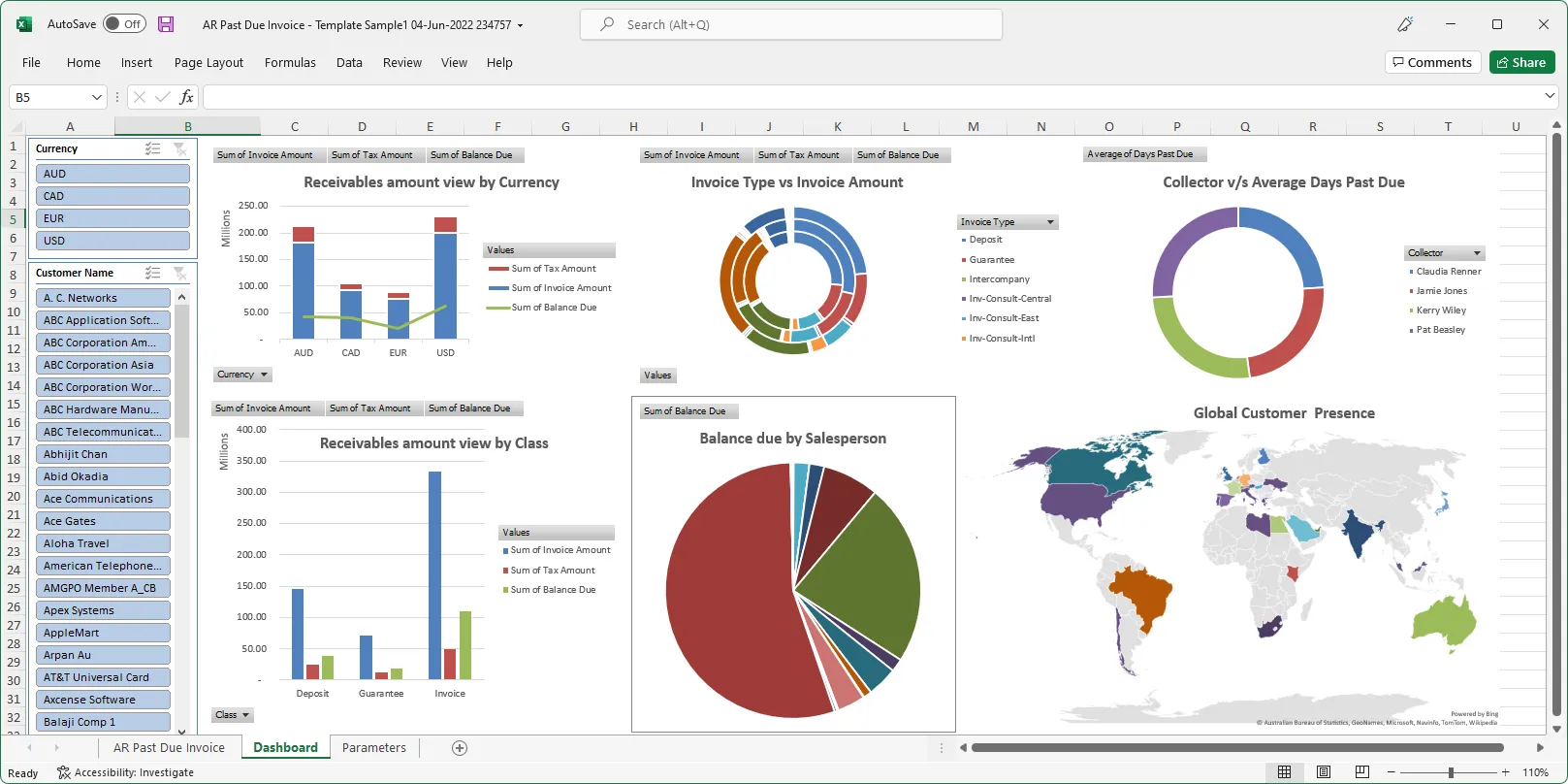
The Excel template upload functionality in Blitz Report allows users to create their own layouts by uploading an Excel template with additional sheets and charts, automatically refreshed when the report runs again. This allows to create custom dashboards and more advanced visualizations of report data.
You can download and use Blitz Report free of charge for your first 30 reports.
The installation and implementation process usually takes less than 1 hour; you can refer to our installation and user guides for specific details.
If you would like to optimize your Oracle EBS implementation and or operational reporting you can visit www.enginatics.com to review great ideas and example usage in blog. Or why not try for yourself in our demo environment.
Useful Links
Blitz Report™ – World’s fastest data upload and reporting for Oracle EBS
Oracle Discoverer replacement – importing worksheets into Blitz Report™
Blitz Report™ Questions & Answers
Supply Chain Hub by Blitz Report™
© 2025 Enginatics